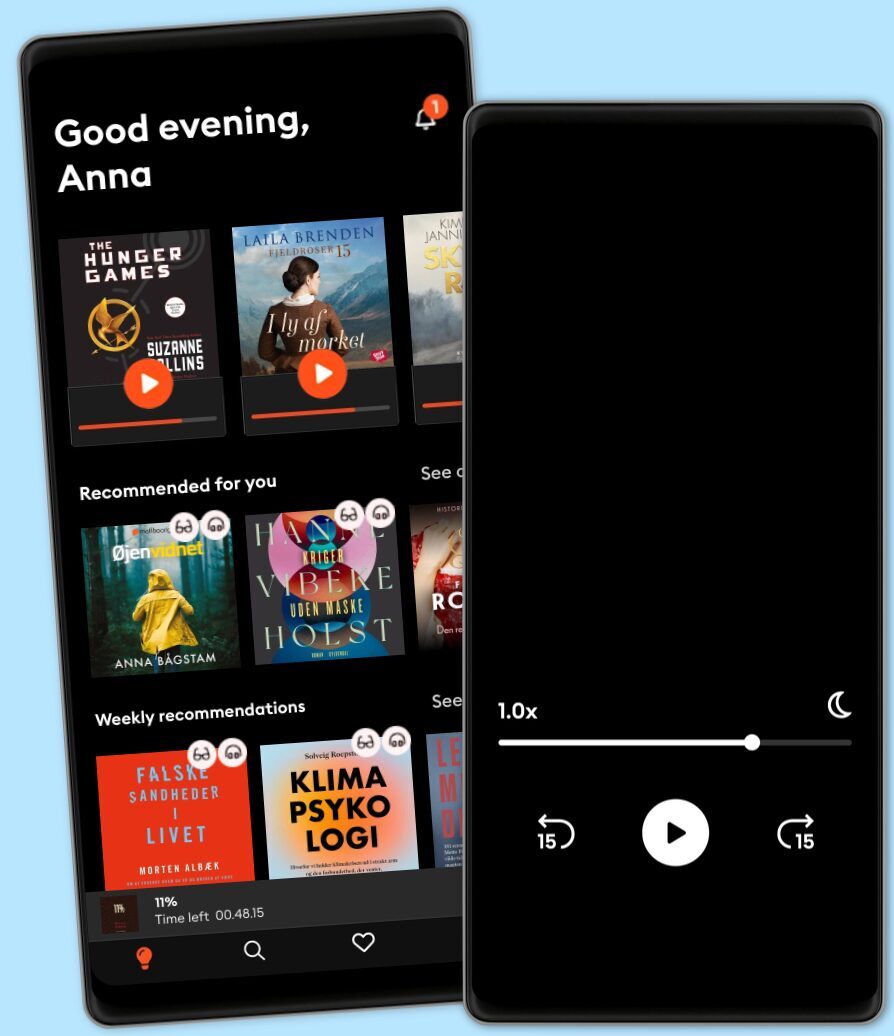
Lyt når som helst, hvor som helst

Dyk ned i over 1 million e- og lydbøger samt podcasts.

  • Over 1 million titler
  • Eksklusive titler + Mofibo Originals
  • Download og nyd titler offline
  • Opsig når som helst
Prøv nu
Cover for The Birth of Anarchism: 1849-1887
1 Bedømmelse

5

Serier

5 af 25

Længde
1T 53M
Sprog
Engelsk
Format
Kategori

Fakta

Mankind can rule itself without the force of top-down authority, and freedom is more than just choosing how to meet the needs and demands of capital. Inequality is structural and intentional, not inevitable and necessary.

It does not have to be this way. In solidarity, we are better.

Think for yourself, and question authority.

This is the essence of anarchism, which has a bad name and reputation because it attacks the necessity of centralised power and authority. The media archetype is Tyler Durden, filled with violence and nihilism – yet anarchism is the most positive of political philosophies, one that Jesus and Buddha both preached, stating that empathy and a rejection of authority were key to human flourishing. Neither would disagree with most early anarchists.

Proudhon, whose “property is robbery” is perhaps the most well-known anarchist slogan, lays out the conceptual foundation for key anarchist ideas. He argues that usury (charging interest) is a fundamental harm to society, that there is enough for everyone if we simply take other values to be higher than capital gain, that mutualism is inevitable, and that all governments and ideologies make the same mistake, in trying to change society from the top. Positive change must arise from the great masses of humanity, not from their rulers.

Bakunin's speeches are about solidarity arising from the masses, and the ground for a global reconfiguration.

Louis Lingg was convicted to death with six others, for being one of the ‘Chicago Anarchists’. They were executed to make a political point, based on corrupted evidence and perjury. His statement is one of contempt for the powers that be, and his belief that mankind should be free and should fight until it is.

We end with Kropotkin, who firmly believed in decentralized society. He believed that the greatest strength of mankind lies in the masses, not their rulers, and exhorts us to “Act for Yourselves”.

© 2023 Brimir & Blainn (Lydbog): 9798368989488

Udgivelsesdato

Lydbog: 11. oktober 2023

Bøger, der ligner The Birth of Anarchism: 1849-1887

  1. The Beats: A Very Short Introduction
    The Beats: A Very Short Introduction David Sterritt
  2. Why I Am Not a Christian and Other Essays on Religion and Related Subjects
    Why I Am Not a Christian and Other Essays on Religion and Related Subjects Bertrand Russell
  3. Seventeen Contradictions and the End of Capitalism
    Seventeen Contradictions and the End of Capitalism David Harvey
  4. Ruin the Sacred Truths: Poetry and Belief from the Bible to the Present
    Ruin the Sacred Truths: Poetry and Belief from the Bible to the Present Harold Bloom
  5. On Anarchism
    On Anarchism Noam Chomsky
  6. The Art of Literature
    The Art of Literature Arthur Schopenhauer
  7. Dialogues Concerning Natural Religion and The Natural History of Religion
    Dialogues Concerning Natural Religion and The Natural History of Religion David Hume
  8. Film Music: A Very Short Introduction
    Film Music: A Very Short Introduction Kathryn Kalinak
  9. Take Arms Against a Sea of Troubles: The Power of a Reader's Mind over a Universe of Death
    Take Arms Against a Sea of Troubles: The Power of a Reader's Mind over a Universe of Death Harold Bloom
  10. Radical Sacrifice
    Radical Sacrifice Terry Eagleton
  11. God's Long Summer: Stories of Faith and Civil Rights
    God's Long Summer: Stories of Faith and Civil Rights Charles Marsh
  12. Critical Theory: A Very Short Introduction
    Critical Theory: A Very Short Introduction Stephen Eric Bronner
  13. Imperialism the Highest Stage of Capitalism
    Imperialism the Highest Stage of Capitalism Vladimir Lenin
  14. Hinduism: A Very Short Introduction
    Hinduism: A Very Short Introduction Kim Knott
  15. How to Think about War: An Ancient Guide to Foreign Policy
    How to Think about War: An Ancient Guide to Foreign Policy Thucydides
  16. The Need for Words: Voice and the Text
    The Need for Words: Voice and the Text Patsy Rodenburg
  17. Reflections: Essays, Aphorisms, Autobiographical Writings
    Reflections: Essays, Aphorisms, Autobiographical Writings Walter Benjamin
  18. Taming the Rascal Multitude: Essays, Interviews, and Lectures 1997–2014
    Taming the Rascal Multitude: Essays, Interviews, and Lectures 1997–2014 Noam Chomsky
  19. The Novel that Invented Modernity: Don Quixote de La Mancha
    The Novel that Invented Modernity: Don Quixote de La Mancha Ilan Stavans
  20. Micromegas by Voltaire
    Micromegas by Voltaire Voltaire
  21. Hegel in A Wired Brain
    Hegel in A Wired Brain Slavoj Žižek
  22. The Elementary Forms of the Religious Life
    The Elementary Forms of the Religious Life Emile Durkheim
  23. World Music: A Very Short Introduction
    World Music: A Very Short Introduction Philip V. Bohlman
  24. Collected Works Of Marxism, Anarchism, Communism: The Communist Manifesto, Reform or Revolution, The Conquest of Bread, Anarchism: What it Really Stands, The State and Revolution, Fascism: What It Is and How To Fight It
    Collected Works Of Marxism, Anarchism, Communism: The Communist Manifesto, Reform or Revolution, The Conquest of Bread, Anarchism: What it Really Stands, The State and Revolution, Fascism: What It Is and How To Fight It Karl Marx, Friedrich Engels, Emma Goldman, Leon Trotsky, Rosa Luxemburg, Vladimir Lenin, Peter Kropotkin
  25. The Aspern Papers
    The Aspern Papers Henry James
  26. A Little History of Poetry
    A Little History of Poetry John Carey
  27. Science and Religion: A Very Short Introduction
    Science and Religion: A Very Short Introduction Thomas Dixon
  28. Émile Zola: A Very Short Introduction
    Émile Zola: A Very Short Introduction Brian Nelson
  29. A New World in Our Hearts: In Conversation with Michael Albert
    A New World in Our Hearts: In Conversation with Michael Albert Noam Chomsky
  30. Liberal Fascisms
    Liberal Fascisms Slavoj Žižek
  31. Nietzsche’s The Birth of Tragedy: From the Spirit of Music
    Nietzsche’s The Birth of Tragedy: From the Spirit of Music Friedrich Nietzsche
  32. What Is to Be Done?
    What Is to Be Done? Vladimir Lenin

Vælg dit abonnement

  • Over 1 million titler

  • Download og nyd titler offline

  • Eksklusive titler + Mofibo Originals

  • Børnevenligt miljø (Kids Mode)

  • Det er nemt at opsige når som helst

Den mest populære

Premium

For dig som lytter og læser ofte.

129 kr. /måned

  • 1 konto

  • 100 timer/måned

  • Eksklusivt indhold hver uge

  • Fri lytning til podcasts

  • Ingen binding

Start tilbuddet

Unlimited

For dig som lytter og læser ubegrænset.

159 kr. /måned

  • 1 konto

  • Ubegrænset timer

  • Eksklusivt indhold hver uge

  • Fri lytning til podcasts

  • Ingen binding

Start tilbuddet

Family

For dig som ønsker at dele historier med familien.

Fra 179 kr. /måned

  • 2-6 konti

  • 100 timer/måned pr. konto

  • Fri lytning til podcasts

  • Kun 39 kr. pr. ekstra konto

  • Ingen binding

Dig + 1 familiemedlem

2 konti

179 kr. /måned

Prøv gratis

Flex

For dig som vil prøve Mofibo.

89 kr. /måned

  • 1 konto

  • 20 timer/måned

  • Gem op til 100 ubrugte timer

  • Eksklusivt indhold hver uge

  • Fri lytning til podcasts

  • Ingen binding

Prøv gratis